Techniques · Textures
Reverse spherification
A liquid that contains calcium drops into an alginate bath. A gel membrane forms around each drop while the inside stays liquid, so the sphere bursts in your mouth.
How it works
Sodium alginate, extracted from brown seaweed, forms a gel as soon as it meets calcium ions.
In reverse spherification the calcium goes into the liquid you want to spherify and the alginate goes into the bath. The membrane grows outwards from the drop, so rinsing the sphere in clean water stops the reaction and the inside never gels.
Direct or reverse
| Direct | Reverse | |
|---|---|---|
| Alginate goes | In the liquid | In the bath |
| Calcium goes | In the bath (calcium chloride) | In the liquid (calcium lactate gluconate) |
| Afterwards | Keeps gelling inwards: serve straight away | Stops once rinsed: keeps in its liquid |
| Best for | Small caviar-style pearls | Large spheres, dairy, acidic or calcium-rich liquids |
Starting ratios
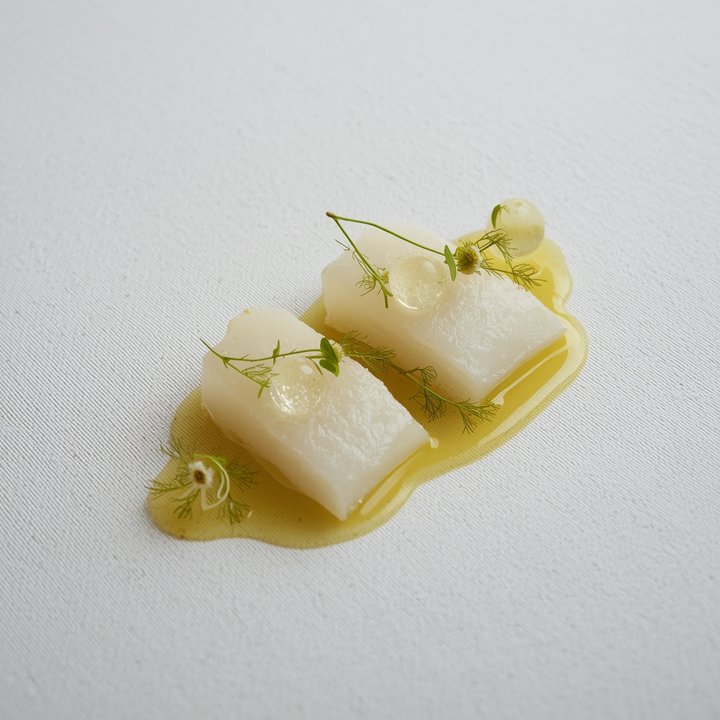
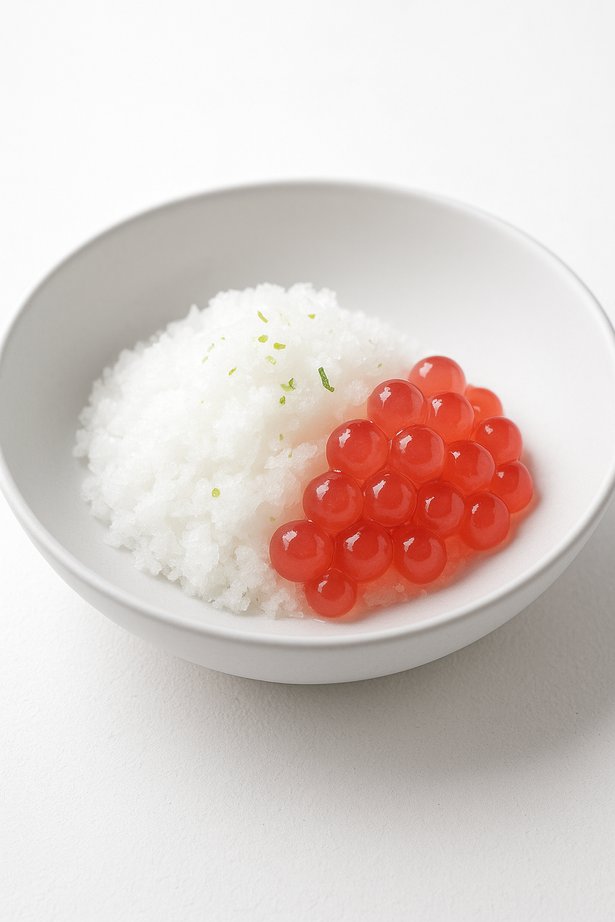
From the grapefruit pearls in Gastro Botanical.
Reverse spherification calculator
Using the Gastro Botanical ratios: 2.5 g of calcium lactate gluconate for every 150 ml of liquid and 5 g of sodium alginate for every 500 ml of water.
- Calcium lactate gluconate
- 2.5 g
- Sodium alginate
- 5 g
Weigh with a 0.1 g precision scale.
Step by step
Dissolve the calcium lactate gluconate in the liquid, whisk and let it settle. If you have time, rest it for an hour.
Blend the alginate into the water and rest the bath for an hour so the air escapes.
Drop the liquid into the bath with a spoon or a syringe and let it gel for 2 to 3 minutes.
Lift the spheres out, rinse them in clean water and keep them until service.